

By Alexa Scheer
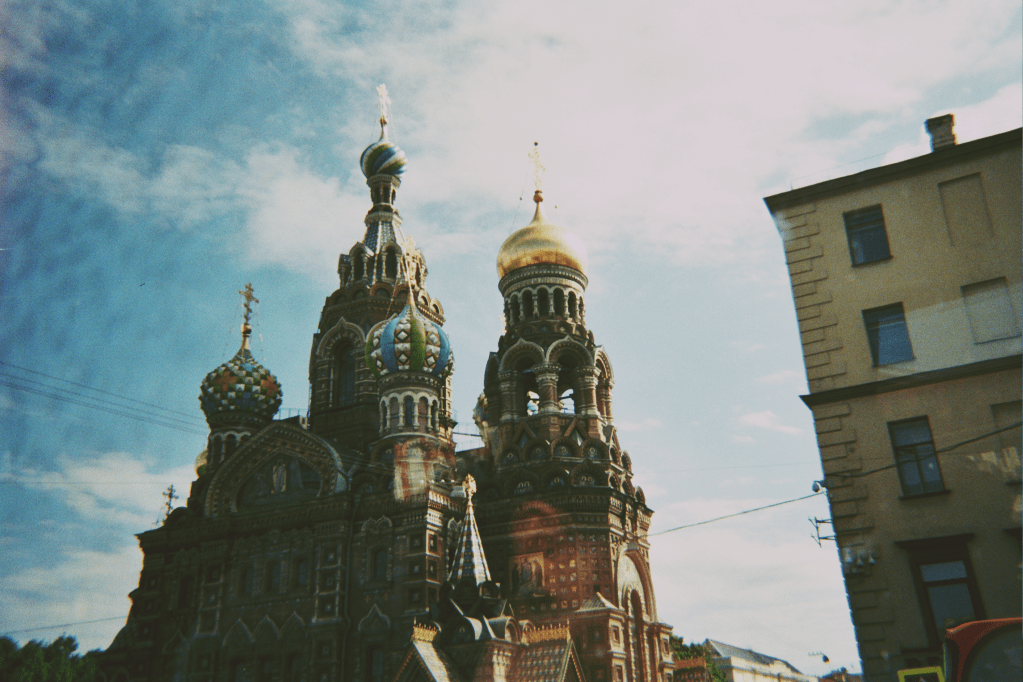
“St. Petersburg, Russia” by Haylee is licensed under CC BY 2.0
THIS ARTICLE WAS PUBLISHED IN THE SPRING 2023 EDITION OF LIVE IDEAS. VIEW IT HERE.
Russia suffers from widespread corruption while simultaneously maintaining a high degree of administrative control, indicating that certain forms of corruption in Russia do not weaken the administrative hierarchy, but in many cases serves to reinforce it.
Rather than being a symptom of inefficient bureaucratic institutions, political corruption in Russia acts as a mechanism for the Kremlin to spread its influence into Russia’s formal and informal institutions alike. This is exhibited through the state’s exploitation of unwritten rules, its selective enforcement of certain standards, its incoherencies in policy, and its informal economic agreements. The overarching system of informality that this corruption creates is a key component in maintaining Russia’s empowered political and economic regimes.
`From his prison cell, Russian opposition leader and founder of the Anti-Corruption Foundation, Alexei Navalny, proclaimed, “I still consider corruption a main problem of Russia, corroding the country, depriving people of a future and hindering any reform. It is the basis of the current government.” Navalny laments how an industrial, well-educated, developed nation like The Russian Federation could fail to counter corruption on such a massive scale. However, corruption in this case is not a failure of weak bureaucratic institutions, but an important aspect of Russia’s state capacity. This function of corruption is achieved through systematized informality, which permits the state to exploit every sector of Russian society, from the loyalties of influential oligarchs to the activities of ordinary Russian citizens. Corruption in Russia is a crucial element of its formal and informal institutions and serves to reinforce the empowered political and economic regimes.
In addition to examining institutionalized corruption within Russia, this paper is supplemented by three brief explorations of the nature of ethics within a society. These philosophical asides contribute to a more holistic analysis of the effects of degenerative societal formations, as well as the potential orders that might contribute to a more ethical society.
Corruption: Defect or Device?
Corruption in Russia is significant compared to other Organization for Economic Co-operation and Development (OECD) nations, and even the many underdeveloped nations. In 2021, Russia received a score of 29/100 on Transparency International’s Corruption Perceptions Index (CPI), far below the minimum score to indicate a serious corruption problem and ranked 136th out of 180 countries measured. Moreover, the World Bank’s 2019 survey of Russia’s private sector firms revealed corruption to be a significant obstacle to doing business in Russia. According to business owners and managers, in 19.8% of public transactions “…a gift or informal payment was requested,” 31.7% of firms expected “…to give gifts in meetings with tax officials,” and 35.3% of firms expected “…to give gifts to get a construction permit.” These indicators of corruption are more than triple the average rate of Europe & Central Asian countries.
Despite its exceptionally high rank on multiple international corruption measures, there has been no negative correlation between the prevalence of corruption in Russia and Russia’s ability to govern, also known as its state capacity. In a 2008 study, Keith Darden revealed that Russia ranks far above average in its ability to extract taxes from its population, and after correlating the percent of GDP extracted as tax revenue to the Corruption Perceptions Index, Darden determines that, contrary to popular perception, there is not an inverse relationship between Russia’s corruption levels and both its extractive capacity and government expenditures. Russia suffers from severe corruption while maintaining an efficient state with a high degree of administrative control, indicating that Russia’s form of corruption does not weaken the functioning of the administrative hierarchy, but reinforces it. This relationship is found in cases where informal contracts exist that provide illicit gains between the state administration and subordinates, especially in societies with barriers to the maintenance of stable, bureaucratic institutions. Darden states, “In such cases, widespread deviations from the law may signal the presence of robust, informal hierarchical institutions rather than the breakdown of the administrative hierarchy.” These findings indicate that corruption in Russia is not a failure of its formal institutions, but a mechanism for its informal institutions to reinforce the state and ensure compliance through illegitimate means.
Consequently, the boundary between Russia’s legitimate and illegitimate forms of influence becomes blurred as both constitute an essential role in maintaining its current regime. This is a result of multiple aspects of Russia’s formal institutions that are designed to compel Russians to operate outside of the formal system. In How Russia really works, Alena Ledeneva demonstrates how corruption was institutionalized in the post-soviet era of the 1990s. Ledeneva finds that the same non-transparency and defected institutional framework which hindered the success of shock therapy created an economy that relied on a scheme of unwritten rules. These unwritten rules were capitalized on by the Russian system to correct for its incoherencies: “The incoherence of formal rules compels almost all Russians, willingly or unwillingly, to violate them and to play by rules introduced and negotiated outside formal institutions.” Deficiencies in banking, property protections, land codes, tax codes, and other aspects of the market system forced Russians to break the formal rules and follow the unwritten ones, leading to the selective enforcement and selective punishment of rule violations. Ledeneva states that out of these unwritten rules, informal institutions are formed, defining informal institutions as “…socially shared rules, usually unwritten, that are created, communicated, and enforced outside officially sanctioned channels.” These exploitations of formal institutions and informality’s purpose of compensating for the incoherencies of the formal institutions encompass much of the logic of corruption that is exercised under the current system. The proliferation of informality within the system enables those who can selectively enforce standards and selectively impose punishments, otherwise known as the administrative regime of Russia.
Philosopher Thomas Hobbes establishes the purpose of formal rules enforced by an authoritative state in his groundbreaking work Leviathan. According to Hobbes’s philosophy, security requires one to attain more power than all rivals, and conquest over others is necessary to maintain that power. Therefore, a man has the right to have dominion over others in pursuit of security. In this condition, every man is in a state of war, hindering innovation, culture, and society. This is a result of a lack of security over one’s possessions or one’s life. However, the actions of men within the state of nature are not immoral, and only when a law is created to police these actions do they become immoral. The condition of war can be seen in groups of people that lack the rule of a government. Therefore, a coercive, absolute power must exist to remove the fear of the state of war and facilitate justice though the threat of punishment. The justice that results will allow for the ownership of property in a commonwealth. While Russia maintains a monopoly on legitimate violence over its constituents, the informality in its rules weakens the benefits of government described by Hobbes, casting doubt on the right to property and security ideally maintained by formal law.
Economy of Favors
Since the 1990s, Putin has increasingly shifted Russia’s formal institutions towards a self-reinforcing system of informality. After his election in 2000, Putin worked to restructure the oligarchic class, ousting Yeltsin’s elites, and instituting his own loyalists. His practice of exchanging rents for the loyalty of his cronies cemented the presence of informal hierarchical institutions, reorienting Russia’s economy and political system into a strict hierarchical structure. This is evidenced by the leaked document Reform of the Administration of the President of the Russian Federation, where Putin outlined his intentions to overrule and reorient the “self-regulating” market.
Institutionalized corruption through unwritten rules in Russia has been shown to be a useful tool used by Putin to straighten his power vertical and achieve his policy goals. Namely, through interference in Russia’s economy and partiality in who receives the benefits of government cooperation. Author of Politics In Russia: A Reader, Joel Ostrow, explains the expansion of corporate capitalism due to institutional corruption by asserting, “Economic status is based largely on informal rules resulting from individual connections, one of unequal favors and access in an environment in which state involvement in the economy is greater than in the 1990s.” The discriminatory treatment of certain individuals when assigning state contracts is a form of corruption that encouraged the monumental shift towards kleptocracy that has occurred during Putin’s regime. Informal contracts and unequal favors between the state and big business is another key instance of corruption and informality being incorporated as an integral part of the system. These informal economic agreements created an environment of non-transparency where the formal institutions would purposely obfuscate privatization policy. This is because if the state had created definite, consistently enforced rules for tax policy, the oligarchs would become “liberalized” in a formal market, therefore restricting the state’s ability to use informal institutions to coerce the oligarch class. The Kremlin relies on this informal advantage to maintain the loyalty of oligarchs and preserve political power at the top. This further clarifies how Russia is able to achieve high state capacity while corruption and informality increase.
One of the most important examples of this occurrence is the rise of Rosneft and Gazprom as the major oil and gas producers in Russia. In Dawisha’s analysis of the development of Putin’s Kleptocracy, she analyzes the extent to which Gazprom has benefited from informal institutions and what effect it has had on the health of Russian society. The state-owned energy cooperation contributed 8% of Russia’s GDP in 2011, however, around 70% of Gazprom’s capital expenditures constitute “value destruction” due to their nontransparent and extraneous nature. These favored companies who received exclusive, lucrative state contracts infamously move their money abroad, operating as private entities in foreign tax havens by selling state-owned assets. Dawisha contextualizes this ecosystem of state contracts and Gazprom’s capital flight, stating, “In any Western country, this would be called criminal malfeasance. In Russia it is called government.” This practice destroys any value the Russian taxpayer is owed, further contributing to the stalling development of their society.
While Putin’s exploitation of informal rules to further the economic interest of private entities might be viewed as unjust within the classical liberal school of thought, Karl Marx provides a unique commentary on where exploitative practices of capitalism like these might fall under his model of justice. According to Allen Wood’s analysis of the Marxian theory of justice, these essential elements of capitalism cannot be unjust because they entirely correspond to the logic of capitalism. For example, if a capitalist (or the Russian oligarch) were to provide the laborer with the full value of their labor power, then the capitalist would never be able to accumulate more capital. Furthermore, providing the laborer with the entire value of their labor would be unjust under a capitalist mode of production because it violates the function of capital as private property, and therefore the rights of the capital owner. Marx does not conceive of justice as a universal law or moral imperative that supersedes material conditions, but rather as something that is contextual and subject to the mode of production. Whether or not the economy of favors propagated in Russia is ethically consistent with their underlying economic system, it is clear that the rampant exploitation of public goods for private gain is contributing to degenerative social structures.
Effect on Civil Society
Many of the most critical effects of institutionalized corruption are found in its impact on Russian citizens and civil society. Formal institutions at every level of the bureaucracy rely on informal means as a way to make up for an absence of adequate resources provided from the top. One noteworthy way that these informal means of “getting things done” are tracked is through the Global Informality Project, an encyclopedia of unwritten rules curated from a multitude of regional experts. Through this encyclopedia’s analysis of Soviet and Post-Soviet informal practices in Russia, an “economy of favors” becomes apparent. This is an economy that distributes resources and connections on the basis on personal favors. One important concept of normalized corruption in Russia is blat, which is the practice of using sociability and personal networks to access influence or resources. While commonly associated with the period of the Soviet Union, Ledeneva argues that blat actually increased after the collapse of the USSR’s centralized formal institutions and the rise of privatization, writing, “In transitional economies, the defects of markets are compensated for by informal networks; low levels of impersonal trust in state institutions shifts the emphasis onto interpersonal trust.” Beyond blat, the Global Informality Project highlights many other methods of coercion that are used by all levels of state officials and bureaucrats against citizens to compensate for institutional failures. For instance, Otkat was prolific in the 2000s as a means for bureaucrats to overcharge persons for a product or service and embezzle the remainder. Compromising materials, or Kompromat, is a well-known tool for officials to coerce and eliminate economic and political competition. Lastly, Vzyatkoemkost, or “corruptogenic potential,” is a type of law that creates an opportunity for exploitation and bribery by granting administrators increased discretionary power. This is often strategically proposed by lawmakers to facilitate the capture of private markets for personal gain. All of these corrupt practices of informality employed by formal institutions create many opportunities for additional burdens to be passed down from high-ranking administrators to the common citizen.
Due to the inherent structure of Russia’s institutions, the average Russian is as equally as intertwined with informality as is the Russian state. One-third of Russians, or 25 million people, are a part of the informal economy. This is typically through the practice of compensating employees with “black” and “gray” salaries. Those who receive black salaries are not registered employees and do not pay taxes on their compensation. Furthermore, many receive gray salaries, meaning they work in the formal sector but informally receive unreported “cash in the envelope” payments. Bribes often compose a portion of these informal payments, particularly for state workers who are poorly compensated by the Russian government. This “second salary” for Russian state workers constitutes an additional tax of the average Russian, aggregating to about 2000 USD per Russian, equal to the size of the entire Russian budget.
Even Russia’s civil society does not evade the effects of institutionalized corruption, as Russians have comparably less trust in their social structures. According to an article by the Harvard Business Review, only 40-50% of Russians were reported to be trusting of their social institution. Often if a civil society operates in an environment of prolific corruption in its formal institutions, corruption is more prominent throughout that civil society and its Non-Governmental Organizations (NGOs).
Philosopher John Rawls in The Idea of Public Reason Revisited upholds reasonable public discourse between free and equal citizens as fundamental to a well ordered constitutional democratic society, an arrangement greatly undermined by Russia’s degenerating trust in their civil society. According to Rawls, the concept of “public reason” is necessary for political liberalism to function as intended. In short, public reason is a concept of political liberalism that necessitates that people who wish to participate in public discourse justify their ideas with reasons that are evidenced by rationale outside of a comprehensive doctrine. The idea of public reason rests on the connections between the government of a constitutional democracy and the citizens, also known as the political relation. This public relation must be defined by a certain type of moral and political reasoning and embody the criterion of reciprocity. This particular conceptualization of a public relation is public reason. Furthermore, citizenship is inherently a form of public relation, and is entered by the citizen when they are born into a society that allows for equal, collective use of political power. Public reason is a requirement for a deliberative democracy where citizens reasonably discuss their plurality of viewpoints on certain political questions. According to Rawls, this is part of one’s duty of civility. However, Russians lack of trust in both their government and social structures damages the criterion of reciprocity and therefore public reason. This greatly impairs Russia’s approach to a well-ordered constitutional democracy.
Conclusion
Institutional corruption in Russia permeates every aspect of its society. It is tactically employed through non-transparency and unwritten rules in Russia’s formal institutions to create a self-reinforcing system of informality. This informality is key to maintaining the administrative hierarchies of Russia’s regime, its coercive power over favored oligarchs, influence within its geopolitical competitors, and its exploitation of the Russian people. These outcomes of corruption when exercised through informality significantly limit the autonomy of Russian citizens while simultaneously increasing the capacities of the systems that repress them.
Works Cited
Cordell, J. (2019, October 29). How Big Is Russia’s Shadow Economy and Why Does It Matter? The Moscow Times. https://www.themoscowtimes.com/2019/10/29/big-russias-shadow-informal-economy-matter-a67817
Darden, K. (2008). The Integrity of Corrupt States: Graft as an Informal State Institution. Politics & Society. https://doi.org/10.1177/0032329207312183
Dawisha, K. (2014). Chapter 7: Russia, Putin, and the Future of Kleptocratic Authoritarianism. In Putin’s Kleptocracy: Who owns Russia? Simon & Schuster.
Foltynova, K. (2020, June 19). Migrants Welcome: Is Russia Trying To Solve Its Demographic Crisis By Attracting Foreigners? Radio Free Europe. https://www.rferl.org/a/migrants-welcome-is-russia-trying-to-solve-its-demographic-crisis-by-attracting-foreigners-/30677952.html
Hobbes, Thomas. 2008. Leviathan. Edited by J. C. A. Gaskin. Oxford World’s Classics. London, England: Oxford University Press.
Kitsing, M. (2003, July 29). Behind Corruption: From NGOs to the Civil Society. Open Society Institute. https://www.opensocietyfoundations.org/publications/behind-corruption-ngos-civil-society
Ledeneva, A. (2021, December 17). Blat (Russia). Global Informality Project. https://www.in-formality.com/wiki/index.php?title=Blat_(Russia)
Ledeneva. A. (2006). How Russia Really Works: The Informal Practices That Shaped Post-Soviet Politics and Business. (p.12) Cornell University Press
Ledeneva, A. (1998). Russia’s Economy of Favours: Blat, Networking, and Informal Exchange. Cambridge and New York: Cambridge University Press
Mesquita, M. (2020, June 29). Kompromat (FSU). Global Informality Project. https://www.in-formality.com/wiki/index.php?title=Kompromat_(FSU)
Ostrow, J. M. (2013). Chapter 4 : The Economy: Market Capitalism or Institutionalized Corruption? In Politics in Russia: A Reader (p. 184). SAGE Publications.
Ramanna, K., & Healy, P. M. (2013). When the Crowd Fights Corruption. Harvard Buisness Review. https://hbr.org/2013/01/when-the-crowd-fights-corruption
Rawls, John. 1997. “The Idea of Public Reason Revisited.” The University of Chicago Law Review 64, no. 3: 765–807. https://doi.org/10.2307/1600311.
The New York Times. (2021, October 20). Aleksei Navalny in His Own Words: Read Excerpts From His Interview. The New York Times. https://www.nytimes.com/2021/08/25/world/europe/navalny-interview-excerpts.html
Timm, C. (2019, May 23). Vzyatkoemkost (Russia and FSU). Global Informality Project. https://www.in-formality.com/wiki/index.php?title=Vzyatkoemkost_(Russia_and_FSU)
Transparency International. (2021). Corruption Perceptions Index. Transparency International. https://www.transparency.org/en/cpi/2021/index/rus
Vasileva, A. (2019, September 29). Otkat (Russia). Global Informality Project. https://www.in-formality.com/wiki/index.php?title=Otkat_(Russia)
Wood, Allen W. 1972. “The Marxian Critique of Justice.” Philosophy & Public Affairs 1, no. 3: 244–82. http://www.jstor.org/stable/2265053.
The World Bank. (2019). Explore Economies: Russian Federation. Enterprise Surveys. https://www.enterprisesurveys.org/en/data/exploreeconomies/2019/russia#corruption
 liveideasjournal.com